GL.iNet Cloud Flaw Used to Infect Routers and KVMs
GL.iNet says attackers abused a cloud management flaw to plant malware on routers and KVM devices. The hole is closed, but infected devices stay infected.
 Dave "Kilobaud" Ferris
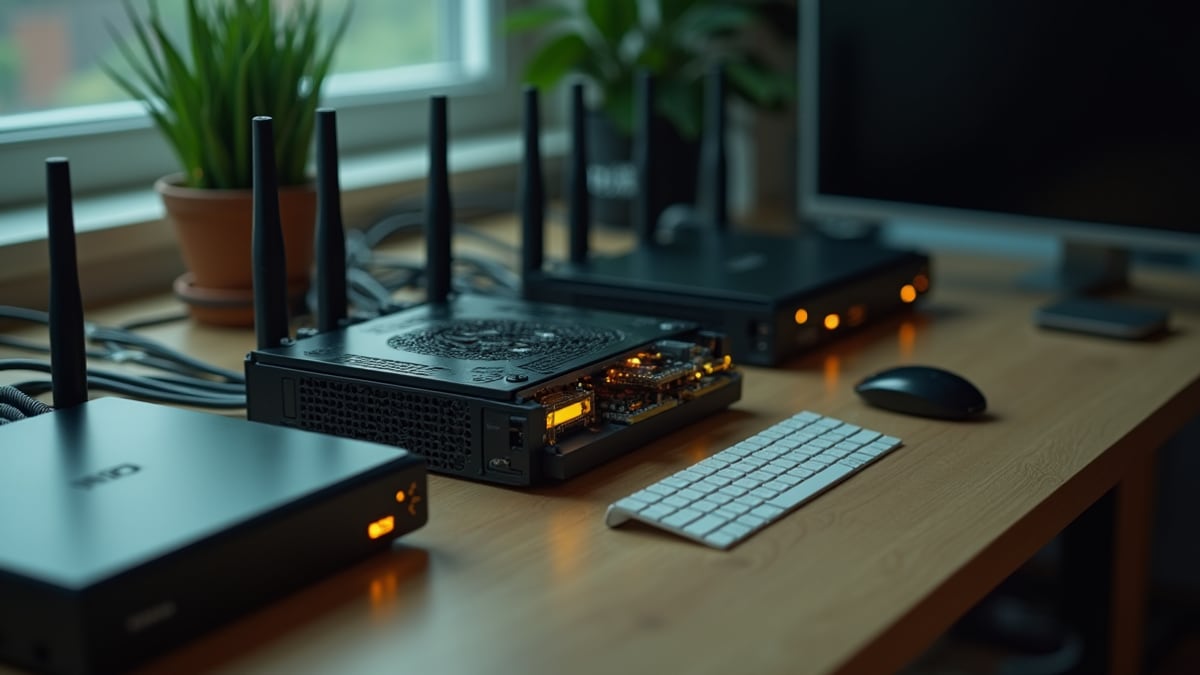
GL.iNet has confirmed that an unauthorized party exploited a vulnerability in its cloud remote management service to install malicious software on customers’ routers and KVM devices. BleepingComputer reported on November 22, 2026 that some affected users describe backdoors and reverse shells that give remote access to infected hardware.
What changed
In a security advisory dated November 20, GL.iNet said it fixed the cloud vulnerability and blocked the access used in the incident. Devices can no longer be newly infected through that path, but the company is explicit that these measures do not remove malware from devices that were already compromised.
GL.iNet has not said how the attackers exploited the platform, how many customers were affected, or whether data was taken from infected devices. It is also still investigating whether computers attached to infected KVM units were compromised. A KVM lets a user control another machine remotely, so a hostile foothold on one is a potential path onto whatever it is plugged into.
What to do
- Check your device. GL.iNet’s first indicator of compromise was a process running as
crond -i /tmp/.log. Forum members warn that this check will miss other backdoors and reverse shells, so a clean result is not proof of a clean device. - Install the latest security firmware, even if you find nothing. Stable releases with further fixes were scheduled for November 22. For KVMs, the guidance is version 1.10.3 or later for the RM10, RM1, RM1V2, RM1PE and RM4PE, 1.10.3 beta or later for the RM10RC, and 1.8.7 or later for the RMQ1. Router owners should take the current release for their model as it appears.
- Treat suspected infections seriously. GL.iNet links to a community-built scanner that checks for known malware files, suspicious processes and altered system utilities, and can collect forensic evidence. Its developers say it cannot catch every infection, and that malicious files kept in configuration directories can survive an ordinary firmware upgrade. A reinstall without retaining settings may be needed.
- Preserve evidence first, then reset. Do not restore a possibly infected configuration, and rotate credentials and access keys the device could have held.
- For KVM users, analyze the attached computers as well.
Analysis
Remote management clouds put one control plane in front of every device a vendor sells. That is convenient for owners and, as here, a single point of failure: a flaw on the vendor’s side reaches hardware that sits behind the owner’s own firewall, with no exposed port required. The fix on the cloud side stops new infections, and that is the easy half. Cleaning devices that are already carrying implants falls to customers, many of whom will never see the advisory. This is labeled Analysis: the sources do not describe the attack path, so the point is about the architecture, not this specific flaw.
Earlier GL.iNet coverage on this site covered a different matter, a batch of firmware flaws: GL.iNet 4.9.0 fixes five RCE flaws. More in the GL.iNet hub.
Found this useful? Share it.