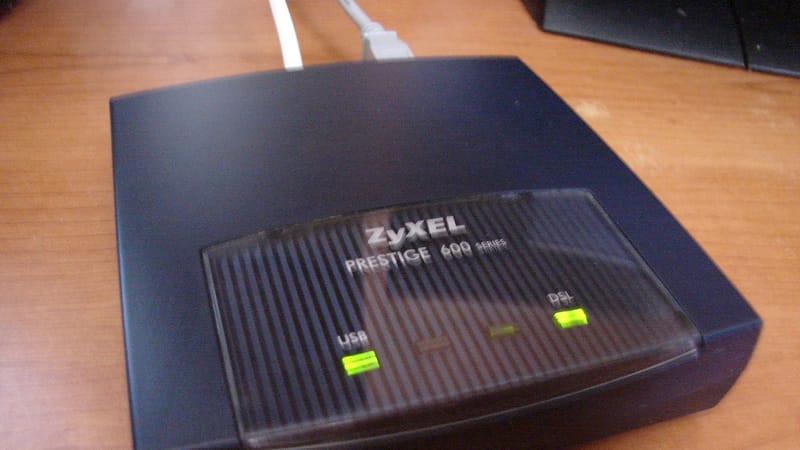
Zyxel
Vulnerabilities in Zyxel ZyWALL/USG, USG FLEX, ATP, and VPN-series firewalls and other SMB/branch-office edge networking gear — perimeter appliances that recur on the CISA KEV catalog and remain a durable target for botnet operators years after patch availability.
Zyxel GS1900 Series Switches Stack-Based Buffer Overflow
Stack-based buffer overflow in Zyxel GS1900 CGI program lets unauthenticated LAN attackers execute OS commands. CVSS 8.8, added to CISA KEV September 21, 2026.
Zyxel DSL CPE OS Command Injection Vulnerability
Multiple Zyxel DSL CPE devices contain a post-authentication command injection vulnerability in the CGI program that could allow an authenticated attacker to execute OS commands via a crafted HTTP request.
Zyxel DSL CPE OS Command Injection Vulnerability
Multiple Zyxel DSL CPE devices contain a post-authentication command injection vulnerability in the management commands that could allow an authenticated attacker to execute OS commands via Telnet.
Zyxel Multiple Firewalls Path Traversal Vulnerability
Multiple Zyxel firewalls contain a path traversal vulnerability in the web management interface that could allow an attacker to download or upload files via a crafted URL.
Zyxel EMG2926 Routers Command Injection Vulnerability
Zyxel EMG2926 routers contain a command injection vulnerability located in the diagnostic tools, specifically the nslookup function. A malicious user may exploit numerous vectors to execute malicious commands on the router, such as the ping_ip parameter to the expert/maintenance/diagnostic/nslookup URI.
Zyxel P660HN-T1A Routers Command Injection Vulnerability
Zyxel P660HN-T1A routers contain a command injection vulnerability in the Remote System Log forwarding function, which is accessible by an unauthenticated user and exploited via the remote_host parameter of the ViewLog.asp page.
Zyxel Multiple NAS Devices Command Injection Vulnerability
Multiple Zyxel network-attached storage (NAS) devices contain a pre-authentication command injection vulnerability that could allow an unauthenticated attacker to execute commands remotely via a crafted HTTP request.
Zyxel Multiple Firewalls Buffer Overflow Vulnerability
Zyxel ATP, USG FLEX, USG FLEX 50(W), USG20(W)-VPN, VPN, and ZyWALL/USG firewalls contain a buffer overflow vulnerability in the notification function that could allow an unauthenticated attacker to cause denial-of-service (DoS) conditions and remote code execution on an affected device.
Zyxel Multiple Firewalls Buffer Overflow Vulnerability
Zyxel ATP, USG FLEX, USG FLEX 50(W), USG20(W)-VPN, VPN, and ZyWALL/USG firewalls contain a buffer overflow vulnerability in the ID processing function that could allow an unauthenticated attacker to cause denial-of-service (DoS) conditions and remote code execution on an affected device.
Zyxel Firewall OS Command Injection
An OS command-injection vulnerability in multiple Zyxel firewall product lines allows an unauthenticated attacker to execute arbitrary commands by sending a crafted packet to the device. Exploited by Mirai-variant botnets shortly after disclosure.
Zyxel Multiple Firewalls OS Command Injection Vulnerability
A command injection vulnerability in the CGI program of some Zyxel firewall versions could allow an attacker to modify specific files and then execute some OS commands on a vulnerable device.
Zyxel Multiple NAS Devices OS Command Injection Vulnerability
Multiple Zyxel network-attached storage (NAS) devices contain a pre-authentication command injection vulnerability, which may allow a remote, unauthenticated attacker to execute arbitrary code.
Zyxel Multiple Products Use of Hard-Coded Credentials Vulnerability
Zyxel firewalls (ATP, USG, VM) and AP Controllers (NXC2500 and NXC5500) contain a use of hard-coded credentials vulnerability in an undocumented account ("zyfwp") with an unchangeable password.